
Stoke City Financial Results 2024/25

Updated: Mar 19
The 2024/25 season was the 108th in Stoke City’s history and their seventh consecutive campaign in the Championship.

Stoke were a Premier League mainstay for a decade, competing in the top flight for 10 consecutive seasons between 2008/09 and 2017/18, including three top-10 finishes. Since relegation in 2018, the club has remained in the Championship, generally occupying mid-table positions, with a highest finish of 14th and a lowest of 18th.
That lowest placing came in the 2024/25 season, when Stoke only secured survival with a goalless draw away to Derby County on the final day. The result was met with considerable relief following a difficult campaign. Narcís Pèlach was appointed early in the season but was dismissed in December and replaced by current manager Mark Robins, who guided the club to safety.
Following a promising start to the current campaign, Stoke have once again settled into mid-table and currently sit 16th in the table, 10 points clear of the relegation places.
The club has been owned by the Coates family since 2006. Peter Coates, co-founder of the online betting giant bet365, reacquired the club through the company after its previous ownership period ended. In August 2024 the club was effectively demerged from bet365, with John Coates, Peter’s son, taking outright ownership of Stoke City.
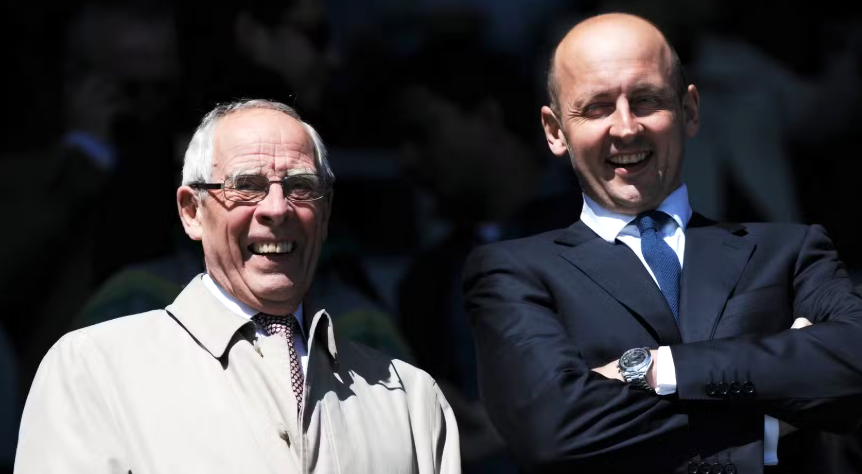
The Coates family have been among the biggest benefactors in English football, having invested close to £400 million in Stoke City since acquiring the club in 2006. This is an extraordinary level of support for a club that has spent the past eight seasons in mid-table in the Championship. Much of this funding has been provided through shareholder loans, with around £210 million written off and a further £40 million converted into equity. In addition, the family purchased the stadium from the club for £89 million in 2021, before returning it to the club as part of the 2024 demerger.
Another sign of the family’s support is that Stoke supporters enjoy some of the lowest ticket prices in the Championship, with prices frozen for 19 consecutive years. It is clear the ownership is not focused on generating financial returns.
The latest loan write-off of £90 million was recorded in the 2024/25 accounts. This significantly distorts the reported result, as it allowed the club to post a £61 million profit, rather than what would otherwise have been a loss of £30 million.

Stoke City's Financial Results 2024/25
Stoke recorded a headline profit of £60.8 million, driven by the waiver of the owners’ remaining £90 million loan. This follows a previous £120 million loan write-off in 2021/22, However, the underlying position remains loss-making, with a deficit of £30 million, compared to a £25.7 million loss the previous year. The was primarily due to higher charges related to the stadium and training ground asset transfer, alongside lower profits from player sales.
Following the restructuring, Stoke are now debt-free, hold cash reserves, and once again own their stadium and training facilities.

Financial highlights:
Revenue: Total revenue reached £35.4 million, up £3.2 million year-on-year, driven primarily by higher EFL broadcast distributions under the new Sky Sports deal.
Staff costs: Salaries and wages fell by £1.2 million to £33.3 million, while player amortisation remained flat at £6.8 million. Total staff costs were £40.1 million, the sixth highest reported so far, representing 115% of turnover.
Player sales: The club generated just £0.2 million in player trading profits, mainly from the departures of Leris and Laurent.
Profit/loss: Following a restructuring, the owners wrote off a £90 million loan, resulting in a reported profit of £60.8 million. Excluding this, the underlying loss was £30 million, the second largest reported so far.
Net assets: In addition to the loan write-off, the stadium and training facilities were transferred back to the club in exchange for shares. This increased net assets by £139 million, from a £57 million net liability to a strong positive position—likely among the highest in the division.
Player trading: Stoke invested £7.3 million in new signings, including Lawal, Gallagher, Bocat and Johansson.
Loans and debt: Following the loan write-off, the club has no outstanding debt.
Cash Flow: The club recorded an operating cash outflow of £11.2 million. It spent £13 million on player signings and £13 million on facilities, while receiving £7.8 million from player sales and £9 million from asset disposals. The net outflow was funded by £46 million in new equity, leaving the club with £35 million in cash reserves.
Financial Outlook
Thanks to the continued backing of the Coates family, Stoke are now debt-free, hold cash reserves, and once again own their stadium and training ground. On paper, this represents a strong financial position.
However, underlying losses remain significant at around £20 million per year. The club must ensure compliance with the EFL’s financial regulations, which permit adjusted losses of £13 million annually. While the recent loan write-off will be excluded from these calculations, it is assumed Stoke remain within the permitted limits.
On the pitch, performance has consistently fallen short of the club’s wage bill, which ranks in the top ten in the division, with Stoke failing to finish higher than 14th in any of the past seven seasons.
There are signs of improvement this season, with Stoke currently sitting 13th and comfortably clear of the relegation places. Financially, though, little is expected to change in the short term. Revenue growth opportunities appear limited, and staff costs are unlikely to decrease materially, so another loss in the region of £20 million is anticipated.
Following the recent ownership restructure, John Coates reaffirmed the family’s commitment to the club:
“My family and I remain steadfast in our commitment to Stoke City, so it’s very much business as usual. Infrastructure projects at the stadium and our training facility will continue at pace in the coming years, and supporters can be assured that investment in the playing squad will be maximised within the competition rules.
Everything we do is geared towards delivering long-term success and representing our fanbase and local community with pride.”
Ticket freezes are one thing, but a genuine push for the play-off places would go some way to justifying their massive investment in the club.
Turnover
Key revenue sources include matchday income (ticket sales), central broadcasting distributions from the EFL, Premier League solidarity payments, and commercial income such as sponsorships, merchandising, and other business activities.
Since the end of Premier League parachute payments in 2020/21, revenue has remained relatively flat. It did rise slightly in 2024/25, largely driven by an increase in broadcasting income.

To date, twelve clubs have published their financial results. The chart below compares Stoke’s reported figures with those published accounts, alongside our revenue estimates for the remaining clubs. Stoke record one of the lowest matchday revenues in the Championship, largely due to their historically low ticket pricing. However, they generate one of the highest levels of commercial income, driven by strong sponsorship revenues. Overall, we expect Stoke to rank around eighth in total revenue across the Championship.

Matchday Revenue
Matchday revenue is influenced by factors such as the number of home games, average attendance, ticket prices, and the club's ability to generate income from hospitality events and corporate boxes. The only exception to this is domestic cup matches, where revenue is shared between the clubs and the FA.
Stoke City have played at the bet365 Stadium since leaving their former home, the Victoria Ground, in 1997. The stadium was originally known as the Britannia Stadium before being renamed the bet365 Stadium in 2016 as part of a naming rights agreement with the club’s owners.

In 2021, the stadium and training ground were sold to an entity within the bet365 group for £70 million. However, in 2024/25, as part of a change in the club’s ownership structure, these assets were transferred back to the club in exchange for £86 million in equity, effectively returning ownership to the club at no additional cost.
The stadium has a capacity of 30,089, making it the 10th largest in the division. In the 2024/25 season, Stoke averaged 22,804 supporters per league match, equivalent to 76% of total capacity, consistent with the previous season.

Stoke's average attendance was the 1oth highest in the league.

The club played one additional domestic cup match compared with the previous season, where revenues are shared. With attendances remaining flat, the total number of paying fans was largely unchanged.
Stoke have recently announced that season ticket prices for the 2026/27 season have been frozen for the 18th consecutive year, which is positive news for the fans. Adult season tickets are available for £300–£350, around £15 per game. These low prices are reflected in the average matchday revenue per fan, which was only £10.28 in 2024/25.
This is likely the lowest in the league and well below the £15.50 average for the division.
With the price freeze, it is unsurprising that matchday revenues have remained flat over the last few years, with £5.7 million earned in 2024/25, the same as the previous season.

While the club’s average attendances were the 10th highest in the division, the low revenue per fan means total matchday income is likely to rank among the lowest in the league.

While there is ongoing investment in the stadium and training facilities, the club has no plans to expand the bet365 Stadium.
Broadcast Revenue
The new EFL domestic broadcasting agreement with Sky has increased central distributions to Championship clubs. The structure comprises a basic award of approximately £4.5–£5.0 million per club, facility fees for televised matches and merit payments linked to final league position. In aggregate, central distributions now total approximately £5.5–£6.5 million per club, compared with roughly £4.0 million in the prior year.
In addition, Championship clubs receive Premier League solidarity payments of approximately £5 million, alongside any prize money generated through domestic cup competitions. As a result, Stoke's total broadcast revenue increased to £11.9 million for the year, up from £9.8 million in 2023/24.

Revenue distribution within the Championship remains heavily distorted by the Premier League’s parachute payment system. Clubs relegated from the Premier League receive 55% of the Premier League equal-share distribution in year one, 45% in year two, and — if they had been in the Premier League for more than one season — 20% in year three.
Due to the recent “yo-yo” effect between the two divisions, only four clubs received parachute payments in 2024/25. The three clubs relegated from the Premier League each received approximately £50 million in year-one payments, while Leeds United, in their second Championship season, received approximately £45 million.

Commercial Revenue
Commercial revenue includes sponsorships, retail merchandising, and other commercial activities. As owners of the club, it is unsurprising that bet365 continued as the club’s front-of-shirt sponsor. Unlike the Premier League, there is no imminent ban on betting companies appearing on kits, so this agreement is expected to continue for the foreseeable future, along with the stadium naming rights.
Stoke’s commercial income, including sponsorship, increased by £1.1 million to £17.8 million in 2024/25..
.

Of the £17.8 million, £10.3 million comes from sponsorship. Not all clubs report sponsorship separately, but Stoke’s income from this stream is high compared with their peers. Only five clubs have so far reported sponsorship separately, and Stoke’s income is more than double the next highest, which is Norwich.

This does appear high relative to Stoke’s size and recent on-field performance. It also contributes to Stoke reporting one of the highest commercial revenues in the Championship. We expect only Leeds and Bristol City, who earn additional income from Bristol Bears rugby club using the stadium, to report higher figures.

Staff Costs
Staff costs encompass salaries and wages for all employees, the amortisation of player transfer fees (spreading a player’s acquisition cost over the length of their contract), and any impairments, recognised when a player’s estimated market value falls below their book value.
Following relegation from the Premier League, the club used parachute payments to maintain a relatively high wage bill in an attempt to secure a quick return to the top flight. However, this proved unsuccessful, and spending has since been reduced. This trend continued in 2024/25, with salaries and wages falling from £34.4 million to £33.3 million.
Player amortisation followed a similar pattern, declining as players were offloaded after the failed promotion push. There was, however, a slight increase in 2024/25, rising by £0.9 million to £7.5 million, after a £7 million investment in new signings.


Compared with the eleven other clubs to have published results, Stoke’s total staff costs of £40.8 million rank as the sixth-highest. However, none of the clubs currently receiving parachute payments have reported yet, and their figures are expected to be significantly higher. On that basis, Stoke’s staff costs are likely to rank closer to 10th in the division once all results are available.
With the club finishing 18th, this was a significant underperformance relative to their staff cost base.

Stoke’s staff costs equate to 115% of turnover, creating clear profitability challenges unless the club can generate profits from player sales—something they have not achieved in the past two seasons.
Despite exceeding 100%, Stoke’s ratio ranks only eighth among the twelve clubs to have published accounts, with Hull City topping the list at a striking 182%. As illustrated below, this highlights a broader structural issue across the Championship, with only one club so far—relegated Plymouth—reporting staff costs below turnover.

Profit on Player Sales
As noted, Stoke’s profits from player sales have been limited over the past two seasons, with their last significant disposal being Harry Souttar’s £15 million move to Leicester in January 2023.
In 2024/25, the club generated just £0.2 million in player trading profits from the departures of Mehdi Leris to Pisa and Josh Laurent to Burnley.

Of the twelve Championship clubs that have published their results, Stoke recorded the second lowest player sales profits, ahead of only Preston who had no sales.

The club is expected to generate around £5 million in profits this season, driven by the sales of two academy graduates, Sol Sidibe and Jaden Dixon, along with Wouter Burger.
Profit and Loss
Stoke’s recent profit and loss figures are heavily distorted by two loan write-offs from parent company bet365. Unlike the more common practice of converting debt to equity, these loans were waived, meaning the write-offs are recorded directly in the profit and loss. The first was £120 million in 2021/22, and the second £90.4 million in the latest accounts. These are clearly extraordinary amounts, but there was little or no chance the money would ever be repaid.
The debts primarily accumulated before 2021, after the club had invested heavily in the squad in an attempt to return quickly to the Premier League.
In 2021, bet365 also purchased the stadium and training facilities from the club, generating £33 million in profit on the sale of assets. The assets have since been transferred back to club in exchange for equity with no cost to the club.
Excluding these exceptional items, the club has posted losses in each of the past seven seasons. Since parachute payments ended in 2022, losses have averaged just over £20 million per year—higher than the Championship average of around £15 million, but not uncommon.


In 2024/25, total revenue rose £3.2 million year-on-year to £35.4 million, while salaries and wages fell by £1.2 million and other operating expenses declined by £2 million. As a result, EBITDA (earnings before interest, tax, depreciation, and amortisation) improved by £6.4 million, though it remained negative at £16.1 million.
Following the transfer of the stadium and training facilities, depreciation increased by £1.6 million, and the club incurred a £4 million land tax charge. After accounting for £6.8 million in player amortisation, Stoke reported an operating loss of £31.1 million. Very few Championship clubs have recorded operating profits in recent years (none in 2023/24), highlighting the division’s heavy reliance on player trading to offset losses.
For Stoke, player sales generated just £0.2 million in profit in 2024/25, but the loan write-off turned an underlying £31 million loss into a reported profit of £60.8 million.
Most Championship clubs operate at a loss. In 2023/24, only four clubs reported a profit, all driven by player sales, with the median loss around £15 million. Early results for 2024/25 show a similar pattern, with only Plymouth and Millwall avoiding a real loss.
When adjusted for the loan write-off, Stoke’s loss would have been the second largest in the division, exceeded only by relegated Cardiff City, who recorded a £35 million loss.

Without promotion, opportunities for Stoke to grow revenue are limited, and reducing staff wages further could negatively impact on-field performance. As a result, like many Championship clubs, player trading remains the primary lever available to help reduce losses.
In the meantime, the club remains fully reliant on owner funding to cover these deficits,
Net Assets
Net assets represent the difference between total assets and total liabilities and correspond to the club’s net equity.
Assets include fixed assets—such as player registrations, facilities, and goodwill—as well as current assets like trade debtors, transfer fees receivable, and cash.
Liabilities comprise loans (from banks, shareholders, or group companies), transfer fees payable, trade creditors, deferred income (for example, advance season ticket sales), and other financial provisions.
Prior to 2024/25, Stoke reported net liabilities, largely due to loans owed to their parent company, and did not own their stadium or training facilities. Following a restructuring in 2024/25, these loans were written off, while ownership of the stadium and training ground was transferred to the club in exchange for equity. In addition, a further £40 million of equity was injected, boosting cash reserves.
Together, these changes transformed the balance sheet, moving the club from net liabilities of £57 million to a strong net asset position of £139 million.
The club’s principal assets are now its playing squad, with a net book value of £12 million, and its facilities — including the stadium and training ground — valued at £97 million, alongside £47 million in cash and other assets.
These are offset by just £17 million in liabilities and provisions.


This transformation has left Stoke with the strongest balance sheet in the Championship, with the highest net asset position based on the latest available accounts.
More broadly, this sets them apart from most clubs in the division. Many Championship sides carry significant debt, typically in the form of loans from their owners, which often results in a net liability position. Based on the latest available accounts, 13 clubs reported negative equity.
In practice, these owner loans are rarely repaid in cash and are more commonly converted into equity over time.

Player Trading
After relatively heavy investment in 2023/24, when the club spent over £18 million on new players, activity slowed in 2024/25, with total spend of £7.5 million. This was primarily for the signings of Bosun Lawal (Celtic), Sam Gallagher (Blackburn), Eric Bocat (Sint-Truiden), and Viktor Johansson (Rotherham).
On the sales side, activity was again limited. The departures of Mehdi Léris to Pisa and Josh Laurent to Burnley generating around £4.9 million.
Stoke have operated a Category One academy — the highest level available — for several years, underlining a clear commitment to developing homegrown talent. This serves both to strengthen the first-team squad and to generate future transfer income.
In recent seasons, Nathan Collins, who left the club in 2022 and is now at Brentford, stands out as one of their most notable academy successes.

The club’s £7.53 million in transfer spending is the third lowest reported in the Championship so far this season.

Squad Net Book Value
The squad’s net book value (NBV) represents the total cost of player acquisitions, less accumulated amortisation, with transfer fees spread over the length of each player’s contract.
Unsurprisingly, both the original cost of the squad and its NBV have fallen significantly since Stoke’s time in the Premier League. This decline was accelerated by a substantial £42 million write-down in 2019/20, suggesting that the club had overpaid on some prior acquisitions.
The squad’s NBV now stands at £26 million, which is broadly in line with the Championship average.

Football Net Debt
Football net debt reflects the total amount a club owes to external parties. This includes bank loans (after deducting cash holdings), funding from owners, loans from related entities such as a parent company, and outstanding transfer fees owed to other clubs, minus any transfer fees the club is due to receive.
Stoke City are now in the fortunate position of being debt-free while also holding significant cash reserves. This has been made possible by the owners writing off a combined £210 million of debt (£120 million in 2022/23 and £90 million in 2024/25), alongside a recent £46 million equity injection.

Stoke are now one of the few Championship clubs to be entirely debt-free. Of the clubs that have published 2024/25 accounts so far, Cardiff carry the largest debt at £134 million, while Plymouth is the only other club without debt.

Cash Flow
Cash Flows are reported in three categories:
Cash Flows from Operations refer to cash generated from the club’s core activities—revenue minus day-to-day costs such as salaries, rent, and utilities.
Cash Flows from Investments include cash spent on player acquisitions and facility improvements, net of player or asset sales.
Cash Flows from Financing cover new loans or equity raised, less repayments or buybacks. If operational cash flow cannot fund investments, the shortfall is usually met through financing.
Like all Championship clubs, Stoke experience significant operating cash outflows, as day-to-day costs exceed revenues. In 2024/25, operating cash outflows totalled £11.3 million, an improvement on previous seasons.
During the year, the club spent £13 million on player acquisitions and a further £13 million on assets, most of which went towards the new first-team building at the training facility. On the inflow side, Stoke received £8 million from player sales and a one-off £9.1 million from an asset disposal as part of the restructure.
This left a funding shortfall of over £21 million, which was covered by a £46 million equity injection. As a result, the club’s cash balance rose to £34.9 million, up from £9.1 million at the end of the previous year.
Reporting Entity
This analysis is based on Stoke City Holdings Limited. This entity was transferred to John Coates from the bet365 group in Jul 2024. John Coates is now the sole shareholder in this entity.


Comments