
Wolverhampton Wanderers Financial Results 2024/25

Updated: Apr 16
The 2024/25 campaign was the 147th season in Wolverhampton Wanderers’ history and their seventh consecutive year in the Premier League.

On the pitch, Wolves had a disastrous start to the season, collecting just three points from their first ten matches. Although performances improved slightly thereafter, it was not enough to save Gary O’Neil, who was dismissed in mid-December. Under new head coach Vítor Pereira, the team produced a remarkable run, winning six consecutive matches to pull clear of the relegation zone. Wolves ultimately finished the season in 16th place with 42 points.
Wolves have been owned by Chinese investment group Fosun International since acquiring the club in 2016. The early years of Fosun’s ownership were successful, delivering promotion to the Premier League, two seventh-place finishes, and a run in the UEFA Europa League. However, in more recent seasons the club has struggled on the pitch, with a growing perception that ownership ambition has diminished.
The owners provided significant financial support in the early Premier League years, including a £126 million loan write-off in 2021. However, in the last two seasons, less funding has been provided, with the club increasingly reliant on player sales to offset heavy operating losses. Several key players have been sold, including Rúben Neves, Pedro Neto and Matheus Cunha, with replacements not fully offsetting the impact of those departures.
The current campaign has been a disaster for the club. With only two points after 18 games, relegation was effectively sealed by Christmas. Although results have improved since then, the club remains 15 points from safety with only six matches remaining, making relegation inevitable.
Despite this, Fosun have shown no indication of seeking a sale of the club.
With relegation looming, any disposal of the asset would be poorly timed, further reducing the likelihood of a change in ownership in the near term. However, under fire Chairman Jeff Shi has stepped down but remains chairman and CEO of Fosun Sports Group. On his departure Shi reflected that "maybe we sold too many players in one window," Nathan Shi, has been appointed interim executive chairman.

Wolverhampton Wanderers Financial Results 2024/25
Wolves extended their financial reporting period to 13 months in 2024/25, moving from a May year-end to a June year-end. This aligns with most other clubs and also extends the reporting period into the summer transfer window, allowing late-season player sales to be included in the accounts to assist with profitability rule compliance. The extension has minimal impact on revenue, as most income is earned during the season, but it does increase reported costs.
For the 13-month period, revenue fell by £6 million to £172 million, while salaries increased by £21 million (£8 million on a comparable 12-month basis) to £163 million. These high costs resulted in an operating loss of £121 million, the second highest in the league; however, £117 million in profit from player sales reduced the overall loss to £15 million.

Financial highlights:
Revenue: Total revenue reached £172 million, down £6 million year-on-year due to a lower league finish, which reduced central distributions.
Staff costs: Wages increased by £21 million (£8 million on a 12-month basis), taking total staff costs to £251 million. This is the 16th highest on a 12-month basis and equates to 135% of revenue, the highest ratio in the league.
Player sales: The club generated £117 million from player sales, the highest in the league, primarily from the sales of Kilman, Neto, and end-of-season departures of Cunha and Aït-Nouri.
Profit/loss: Wolves reported a £15 million loss, supported by £117 million in profit from player sales. On a 12-month adjusted basis, the club would have recorded a £1.5 million profit.
Net assets: Net assets declined from £53 million to £46 million.
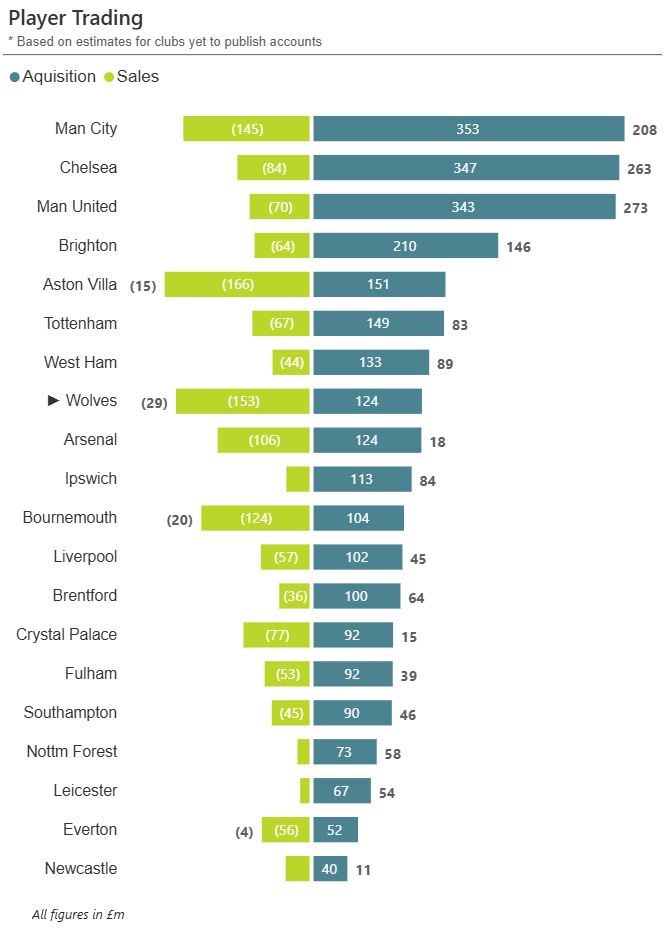
Player trading: Wolves spent £124 million on new signings, including André, Agbadou, Munetsi, Gomes, Djiga, Johnstone, Lima, Meupiyou and Doyle. This was more than offset by £153 million in player sales.
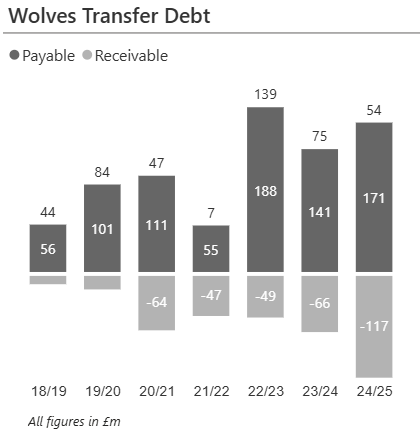
Loans and debt: Total debt stood at £104 million, primarily through a bank loan. The club owed £171 million in transfer fees, offset by £117 million owed to them for player sales.
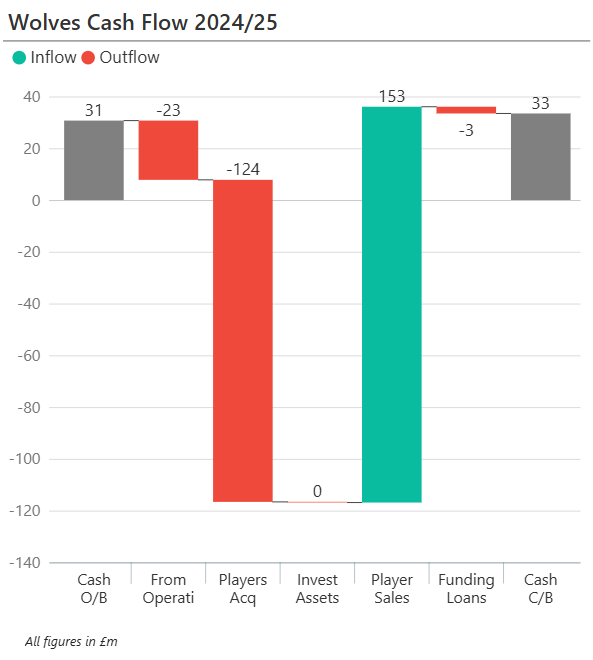
Cash Flow: The club recorded operating cash outflows of £23 million and net investment inflows of £22 million, leaving the cash balance largely unchanged.
Financial Outlook
Relegation to the Championship will have a significant impact on the club’s financial position. Premier League central distributions are expected to fall by around £75 million, while maintaining current matchday and commercial revenues will be challenging. As a result, total revenue is projected to drop to roughly £95 million next season.
With this reduction in income, costs will need to be cut substantially. Wages were close to £150 million in 2024/25 (adjusted to a 12-month period), so a sharp decline is likely. Many players will have relegation clauses in their contracts, and further departures can be expected. By way of comparison, Southampton’s wage bill fell to around £80 million following their most recent relegation.
Although Premier League financial rules are shifting from PSR towards a Squad Cost Ratio model, the Championship continues to operate largely under profit-based regulations, with clubs permitted to make adjusted losses of £13 million per year. This means the club will likely remain reliant on player sales to manage losses. The obvious risk is the potential impact on on-field performance. In addition, if the club fails to secure an immediate return to the Premier League, parachute payments will decline and cease entirely by the fourth year.
It will be a delicate balance between maintaining a relatively high cost base to maximise the chances of an immediate return, and the risk of accumulating significant losses that would need to be addressed in future years through more severe cost cutting.
Turnover
Revenue is generated from three primary streams: matchday income (ticket sales), broadcasting distributions (from the Premier League and, where applicable, UEFA competitions), and commercial activities, including sponsorships, merchandising, and other business operations.
The majority of the club’s revenue comes from Premier League distributions, which are linked to league position. Matchday and commercial revenue have shown little growth over the past seven seasons, increasing to a combined £47 million in 2024/25 compared to £40 million in 2018/19.
Note: the club reclassified its matchday and commercial revenue in 2023/24, with amounts previously reported as commercial now included within matchday revenue.
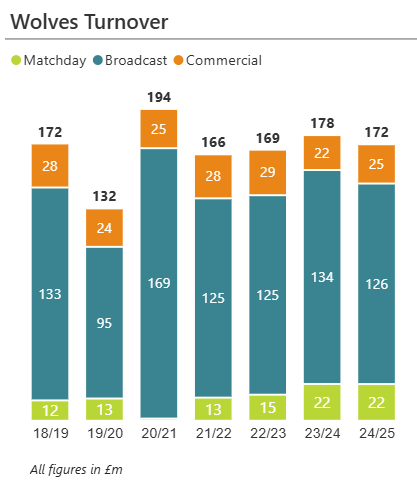
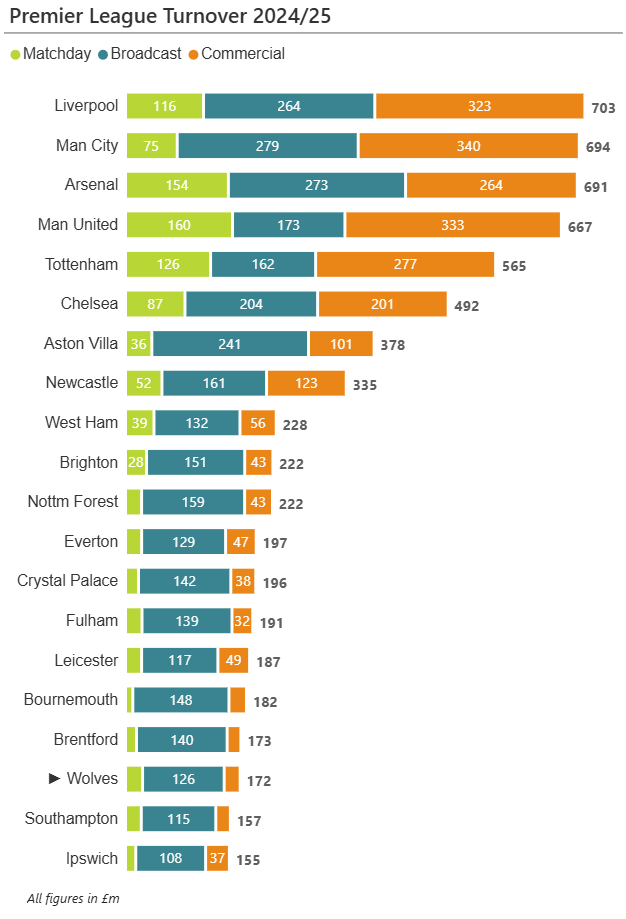
Wolves revenue ranks 18th in the league.
Matchday Revenue
Matchday revenue is driven by several factors, including the number of home fixtures, average attendance, ticket pricing, hospitality and premium seating. Domestic cup competitions are an exception, as gate receipts are shared between the participating clubs and the FA.
Molineux has been the home of Wolves since 1889, making it one of the oldest continuously used grounds in England. The ground is owned by Wolverhampton City Council after they bought it from the club when they were in financial distress in 1986.
The stadium underwent major redevelopment in the late 1990s and has seen further upgrades following the club’s return to the Premier League in 2018. It currently has a capacity of 31,750. There were plans to expand the stadium to around 50,000, but these have gone quiet since the Covid pandemic and, given the club’s current form and relegation, appear unlikely to progress in the near term.

In 2024/25, the club averaged 30,720 fans per league match, a slight decrease on the previous year. The club also played three fewer domestic cup fixtures, where revenue is shared, contributing to a 5% fall in total attendance to 811,000.
In 2023/24, Wolves reclassified their revenue streams, which had the effect of increasing reported matchday revenue and reducing commercial revenue. No explanation was provided. Based on the published matchday figures, average revenue per attending fan was £35.00. This appears high, comparable to Fulham and above Aston Villa and Brentford. Prior to the reclassification, it was £22.25, which seems more in line with expectations.
Despite the slight drop in attendance, a modest price increase meant total matchday revenue remained unchanged at £21.8 million.
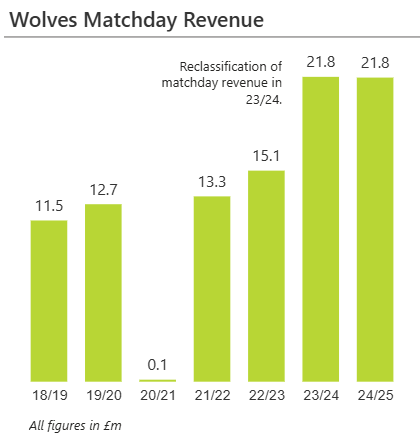
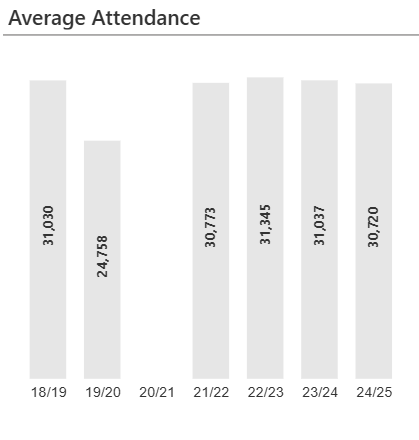
Wolves’ matchday revenue ranks 11th in the league, although this is based on published figures following the reclassification, which appear high relative to their peers.

Broadcast Revenue
Broadcast revenue is generated primarily through central Premier League distributions, UEFA payments from European competitions and the club’s own media activities.
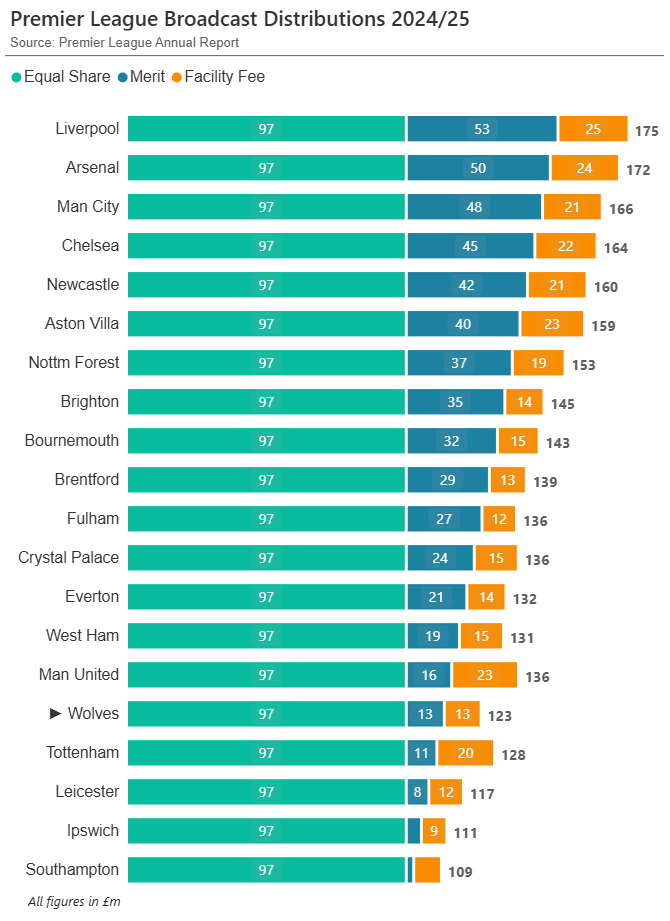
The 2024/25 season marked the third and final year of the Premier League’s current broadcast cycle, with total distributions broadly consistent with 2023/24 levels. Approximately 67% of broadcast income is shared equally among clubs, with the remainder allocated through merit payments based on league position and facility fees linked to the number of live televised matches.
Wolves’ 16th-place finish earned them £123 million in central distributions, down on the previous season, as the lower league position (and associated merit payments) and fewer televised matches (15 compared to 16) reduced overall income.

The chart below shows club-by-club distributions published by the Premier League, with each league position worth close to £3 million in merit payments.
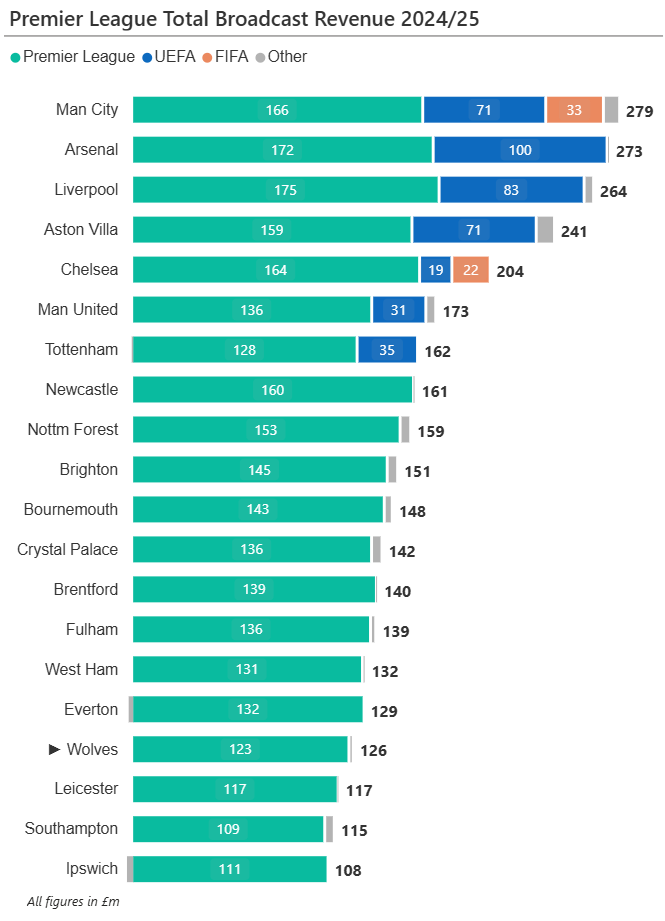
Wolves last participated in European competition in the 2019/20 season, when they earned £19 million from a Europa League quarter-final run. It is unlikely they will return to European competition in the near future. For reference, the chart below shows combined broadcast revenue, including Premier League distributions, UEFA payments, and income from the recently expanded FIFA Club World Cup, which was contested only by Chelsea and Manchester City.
Commercial Revenue
As noted, the commercial revenue stream has been reclassified in recent seasons, so comparisons are not entirely reliable. Total commercial revenue now appears low (while matchday revenue looks high) relative to their peers.
Based on the published figures, Wolves’ sponsorship and advertising revenue totalled £19.8 million. Like many Premier League clubs, Wolves partnered with the betting industry, signing a two-year agreement with Southeast Asian betting platform DEBET covering the 2024/25 and 2025/26 seasons, ahead of the upcoming ban on betting sponsors. The deal is reportedly worth £10 million per year. Other key partners include sports retailer JD Sports as sleeve sponsor (estimated £2 million per year), while their kit supplier, SUDU, is estimated to contribute around £4 million per year.
Other commercial revenue amounted to £5 million, which appears low following the reclassification of revenue streams.
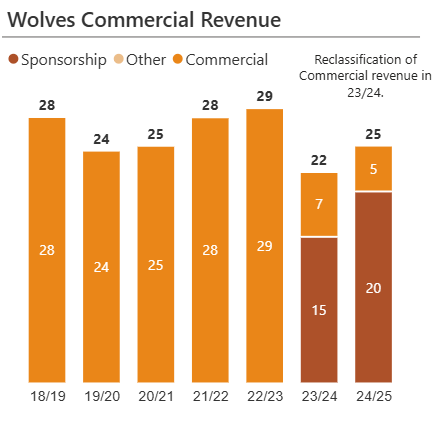
As the chart below illustrates, the “Big Six” remain on a distinctly higher scale for commercial revenue, although Newcastle United and Aston Villa have experienced significant growth following recent Champions League participation. Wolves commercial revenue ranks 18th in the league.

Staff Costs
Staff costs comprise salaries and wages for all employees, the amortisation of transfer fees (the allocation of a player’s acquisition cost over the length of their contract), and impairment charges. Impairments arise when a player’s estimated recoverable value falls below their carrying value on the balance sheet.
Salaries and wages increased in 2024/25 as expected, partly because the accounts cover a 13-month period (as opposed to 12 months in the previous year). However, on a 12-month basis, wages would still have increased by around £8 million to £150 million. This suggests that players recruited in recent years have been brought in on salary levels broadly comparable to those departing.
Amortisation has fluctuated in recent seasons due to significant player trading activity. In 2024/25 it stood at £75 million for the 13-month period, up £11 million from the previous year (or around £5 million on a comparable 12-month basis). The increase reflects the fact that players sold carried relatively low remaining amortisation charges compared with the cost of recent acquisitions.
The club also recorded a £12 million impairment charge. Wolves did not disclose which player(s) this related to. However, it may relate to some recent signings such as Guedes (bought for £27 million), Sam Johnstone (bought for £10 million), and Kalajdžić (bought for £15 million).
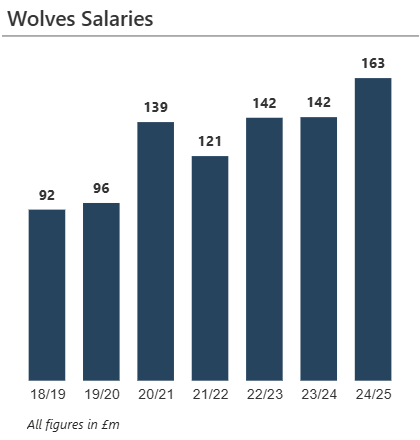

Wolves total staff costs are likely to rank 10th highest in the league. However, adjusted for a 12 month period this would drop to 16th highest. With a 16th place finish, the club therefore performed as expected relative to its staff cost base.
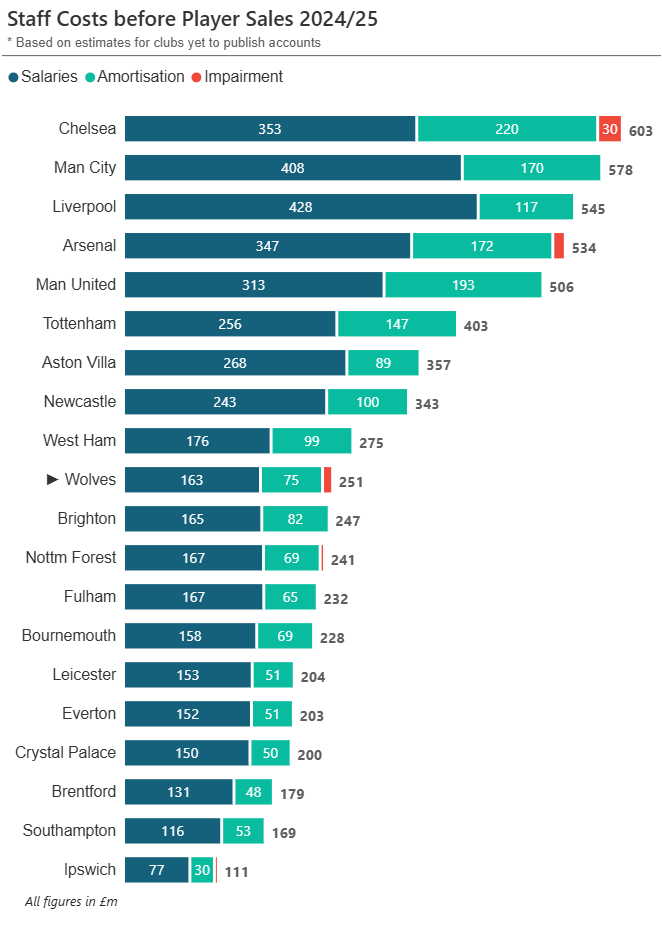
Wolves’ total staff costs of £251 million equate to 146% of revenue, the highest in the league. On an adjusted 12-month basis the ratio would be 135%, still the highest in the league. This inevitably leads to significant operating losses, which can only be reduced through player sales. This ratio has been elevated for several seasons and, with little or no revenue growth, has contributed to the level of player trading in recent years.

Profit on Player Sales
Over the past two seasons, the club has sold players worth around £275 million, generating profits (sale value less net book value) of £181 million. This helped reduce losses to around £15 million in each season, keeping them within the three-year PSR threshold.
In 2024/25, sales included high-profile departures such as Max Kilman (West Ham), Pedro Neto (Chelsea), and, due to the extended financial year-end, end-of-season sales of Cunha (Manchester United) and Aït-Nouri (Manchester City). In total, these generated league-leading profits of £117 million. While this helps satisfy regulatory requirements and provides cash inflow, players of this calibre are difficult to replace and represented a significant loss to the squad.
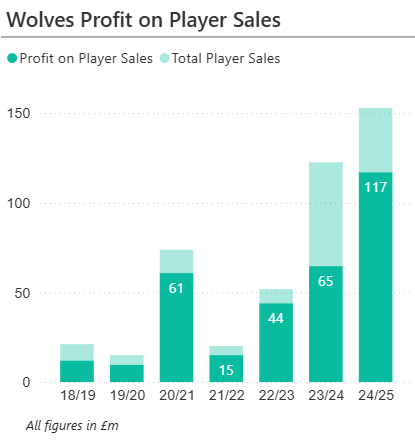
Among the clubs that have published full financial results to date, Wolves profit from player sales ranks the highest in the league.

The exodus did not stop in 2024/25, with Jørgen Strand Larsen (Crystal Palace), Jhon Arias (Palmeiras), Fabio Silva (Dortmund) and Emmanuel Agbadou departing this year, which will generate further profits in the current year’s accounts.
Profit and Loss
Wolves’ high staff costs relative to turnover (146% in 2024/25) have resulted in significant operating losses. In 2024/25, their operating loss reached £121 million, only surpassed by Chelsea’s record-breaking operating loss of £308 million.
The club has therefore had little option but to sell players, which it has done over the past two seasons, reducing losses to around £15 million per year. Note the club reported a £145 million profit in 2020/21, but this was due to a £127 million shareholder write-off, which was recorded as a gain in the profit and loss account.
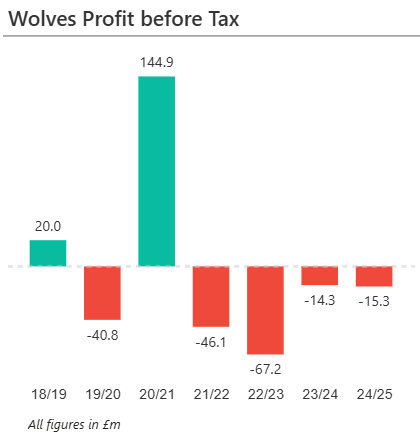

As mentioned, the club extended its financial year in 2024/25 by one month, resulting in a 13-month reporting period compared to 12 months in previous years. This extension has little impact on revenue (as it is largely earned during the season), but it does inflate costs and profits from player sales.
Looking at the 2024/25 results, Wolves’ total revenue reached £172 million, a year-on-year decline of £6 million. Wage costs increased by £21 million (£8 million on a comparable basis), while other operating expenses rose by £2 million. As a result, EBITDA (earnings before interest, tax, depreciation and amortisation) fell by £27 million to negative £30 million.
After accounting for £87 million in player amortisation and impairment and £3 million in depreciation, the club recorded an operating loss of £121 million. While few Premier League clubs report an operating profit, this operating loss was the second highest in the division, behind only Chelsea.
The operating deficit was offset by £117 million in profit from player sales. The club also incurred £11 million in interest expenses, resulting in a net loss of £15 million. The club stated that, on a comparable 12-month basis, it would have reported a £1.5 million profit.
Across the division, Chelsea recorded the largest loss at £262 million, the highest ever reported in the Premier League. Six clubs reported a profit, with total losses across the league amounting to £796 million.
Three clubs generated profits from one-off asset sales in 2024/25. Newcastle recorded £133 million, primarily from the sale of their stadium leasehold improvements. Aston Villa sold their women’s team to a group entity, with the final figure yet to be disclosed but potentially as high as £100 million. Everton also recorded a £49 million gain from the sale of their women’s team and Goodison Park Limited to a group entity.
If these asset sales are excluded, total losses across the league would exceed £1 billion for the year, the highest on record. These losses must be financed, and an additional £1.3 billion of new funding was raised by clubs, primarily to cover operating shortfalls as well as ongoing investment in assets.

Net Assets
Net assets represent the difference between total assets and total liabilities and correspond to the club’s net equity.
Assets include fixed assets—such as player registrations, facilities, and goodwill—as well as current assets like trade debtors, transfer fees receivable, and cash.
Liabilities comprise loans (from banks, shareholders, or group companies), transfer fees payable, trade creditors, deferred income (for example, advance season ticket sales), and other financial provisions.
At the end of the 2024/25 season, Wolves’ total assets stood at £393 million. This included £168 million in player assets and £56 million in fixed assets, which includes recent stadium development but not the stadium itself, which is owned by the local council. The club was also owed £117 million in transfer fees following significant player sales, with the remainder being cash of £35 million and other assets.
These assets were offset by total liabilities of £347 million, comprising £104 million in loans, £171 million in transfer fees payable, and £72 million in other liabilities and provisions, resulting in net assets of £46 million.
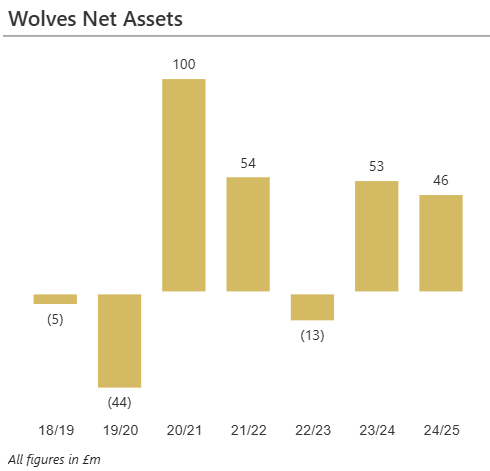

The table below shows the latest available net asset positions of Premier League clubs, with Wolves' net assets of £46 million one of the lowest in the division.

Player Trading
After investing more than £200 million in the squad in 2021/22, costs rose to an unsustainable level, leading to significant player sales over the following two seasons. The departure of several key players contributed to a decline in on-pitch performance. Even outgoing chairman Jeff Shi admitted that “maybe we sold one player too many”.
Key players sold in recent seasons include Matheus Nunes (Manchester City), Rúben Neves (Al-Hilal) and Nathan Collins (Brentford). In 2024/25, further departures included Maximilian Kilman (West Ham), Pedro Neto (Chelsea), Matheus Cunha (Manchester United) and Rayan Aït-Nouri (Manchester City), with total sales that season generating £153 million.
The club has still invested in the squad, spending £124 million on players in 2024/25 including André (Fluminense), Emmanuel Agbadou (Stade Reims), Marshall Munetsi (Stade Reims), Rodrigo Gomes (SC Braga), Nasser Djiga (Red Star Belgrade), Sam Johnstone (Crystal Palace), Pedro Lima (Sport Club do Recife), Meupiyou (FC Nantes) and Tommy Doyle (Manchester City).

Wolves’ player spending was the eighth highest in the league; however, their net spend (acquisitions less sales) was the lowest, which was a £29 million net gain from trading.
Squad Cost and Net Book Value
Squad costs represent the total acquisition cost of all squad members, including transfer fees and associated costs such as agent fees. A squad’s Net Book Value (NBV) represents this acquisition cost less accumulated amortisation, with transfer fees expensed over the length of each player’s contract. For example, a player purchased for £50 million on a five-year contract would have an NBV that decreases by £10 million each year.
Wolves’ net book value has fallen from its peak of £245 million due to the level of player sales and now stands at £168 million.
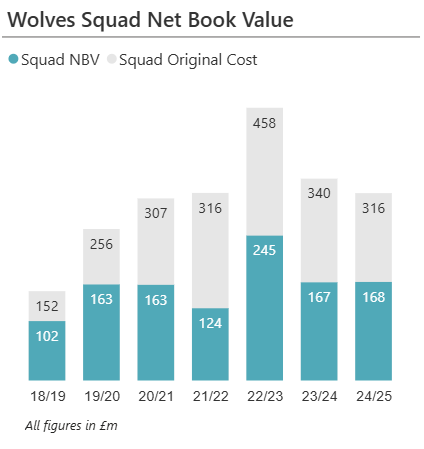
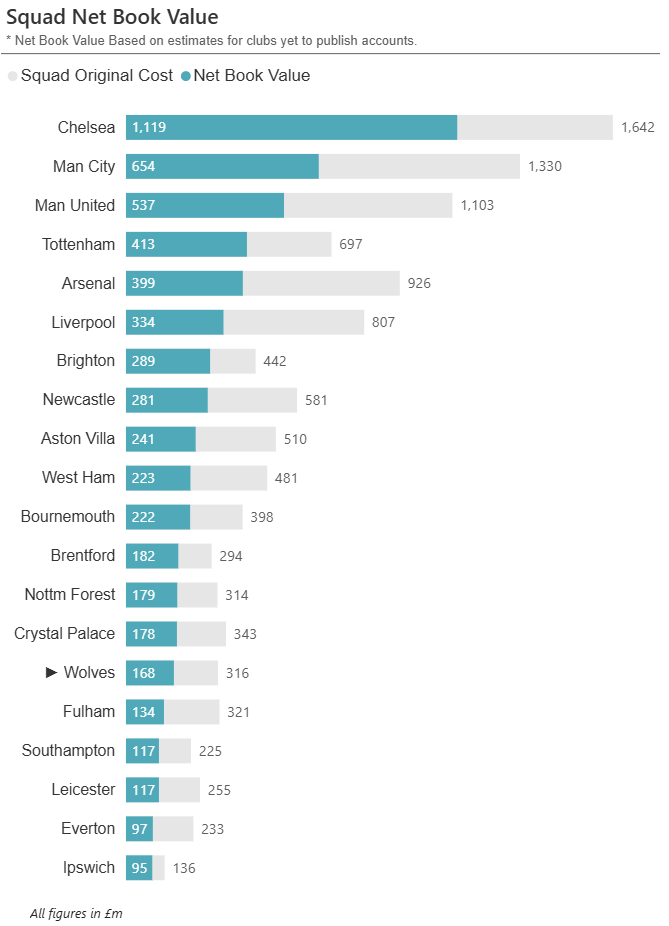
Their net book value of £168 million is 15th highest in the league.
Squad Market Value
The squad's net book value (NBV) is part of the club balance sheet, recorded as Intangible Player Assets. The NBV does not however reflect a squad’s current market value.
According to Transfermarkt.com, Wolves’ squad had an estimated market value of around £287 million at the end of the 2024/25 season, placing it among the lower valuations in the division and ahead of only the relegated clubs. This figure reflects the squad after the departures of Cunha and Aït-Nouri.
This valuation is around £120 million higher than the club’s net book value, representing one of the lowest “uplifts” in the league. This uplift indicates the potential to generate future profits through player sales and provides a measure of how effectively the squad is maintaining or increasing its value.
Among the most valuable players at the end of 2024/25 were João Gomes at £34 million, Jørgen Strand Larsen at £25 million (since sold for £40 million), Toti at £24 million, and André also at £24 million.

Football Net Debt
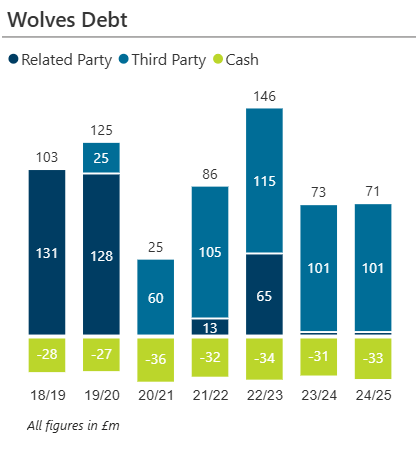
Debt levels have fluctuated in recent years due to an owner loan write-off of £128 million in 2020/21 and a conversion of £80 million of owner loans into equity in 2023/24.
As a result, total debt at the end of 2024/25 stood at £101 million in bank loans, with £22 million due within one year and the remainder falling due after one year. This is offset by £33 million in cash reserves. There are currently no outstanding related-party loans.
Premier League clubs’ total debt, net of cash, is £3.6 billion, down from £4.2 billion in the previous year. A significant factor in this reduction was a £450 million shareholder loan to Everton being converted into equity prior to the club’s sale.
Tottenham recorded the highest debt, driven largely by stadium financing, followed by Manchester United, reflecting their highly leveraged Glazer-era ownership structure. Wolves’ net debt position is among the lower levels in the league.

Following Wolves’ recent transfer activity, the club owed £171 million to other clubs in unpaid transfer fees, offset by £117 million owed to them for player sales.
Cash Flow
Cash Flows are reported in three categories:
Cash Flows from Operations refer to cash generated from the club’s core activities—revenue minus day-to-day costs such as salaries, rent, and utilities.
Cash Flows from Investments include cash spent on player acquisitions and facility improvements, net of player or asset sales.
Cash Flows from Financing cover new loans or equity raised, less repayments or buybacks. If operational cash flow cannot fund investments, the shortfall is usually met through financing.
Up to 2022/23, the owners provided funding to support squad investment (around £195 million since promotion). However, in the last two seasons no new funds have been provided. as player sales have covered operating losses and squad investment.
In 2024/25, the club recorded an operating cash outflow of £23 million due to their high operating costs relative to revenue. They also spent £124 million on player acquisitions, while investment in facilities remained minimal. These outflows were offset by £153 million generated from player sales, leaving the overall cash position broadly unchanged.
Reporting Entity
This analysis is based on the entity W.W. (1990) Limited for a 13-month period, 1st June 2024 to 30th June 2025. The company is owned 100% by Luxembourg based Enormous Victory SARL, which is ultimately owned 82% by Fosun Industrial Holdings Limited based in Hong Kong.


Comments