top of page
< Back

Fulham Financial Results 2024/25

Fulham Financial Results 2024/25

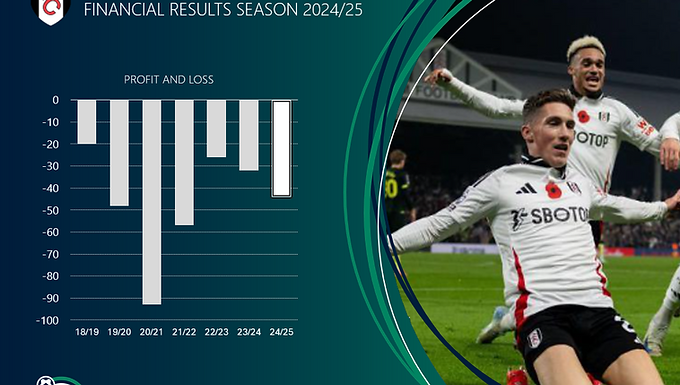
The 2024/25 campaign marked Fulham’s 127th season and their third consecutive year back in the Premier League. Fulham’s recent history has been that of a classic “yo-yo” club, moving regularly between the Premier League and Championship. Following Pakistani-American billionaire Shahid Khan’s takeover in 2013, the club were relegated from the Premier League and spent four seasons in the Championship. Three promotions and two relegations followed over the next six years, before the cycle was finally broken after the appointment of Marco Silva in 2021. Under Silva, Fulham have established themselves as a strong and competitive mid-table Premier League side. In 2024/25, Fulham’s third consecutive Premier League season under Marco Silva delivered an 11th-place finish and a club-record 54 points. The club occupied a comfortable mid-table position throughout the campaign, remaining well clear of the relegation places but ultimately finishing 11 points short of European qualification. In the domestic cups, Fulham reached the FA Cup quarter-finals, where they were eliminated by eventual winners Crystal Palace, while their Carabao Cup campaign ended in the third round. The 2025/26 season has followed a similar pattern. With 48 points and two matches remaining, Fulham are once again comfortably clear of relegation but now appear unlikely to secure European qualification. Off the pitch, uncertainty remains over Marco Silva’s future. The Portuguese head coach is under contract until the end of 2025/26, although reports have linked him with a potential move to Chelsea, where he is viewed as a leading managerial candidate. Ownership Fulham is 100% owned by Pakistani-American billionaire Shahid Khan. Born in Lahore, Khan moved to the United States, where he built his fortune through automotive parts manufacturer Flex-N-Gate Corporation. He completed the takeover of Fulham in 2013 for an estimated £150–200 million, in a debt-free transaction that ended Egyptian businessman Mohamed Al-Fayed’s 16-year ownership of the club. With an estimated net worth of $13–14 billion, Khan is one of the wealthiest owners in British sport. Khan’s stated approach has involved using personal capital to absorb losses, fund infrastructure investment, and support recruitment. While accepting that Fulham’s natural ceiling is likely mid-table Premier League consolidation rather than sustained European contention, his total investment is now estimated at over £900 million—well in excess of even the most generous valuation of the club. Fulham owner Shahid Khan and son Tony Director of football operations. A significant proportion of this funding has been directed towards the redevelopment of the Riverside Stand. Officially completed ahead of the 2024/25 season, it represents the most substantial infrastructure project in Fulham’s modern history. The redevelopment added approximately 3,900 seats, increasing Craven Cottage’s capacity from around 25,700 to 29,600. However, its ambition extends well beyond simple capacity growth, transforming the stand into a year-round leisure and commercial destination, featuring restaurants (including one with Michelin recognition), multiple bars, a boutique hotel, conference facilities and event spaces. The project ran significantly over its original timetable (initial completion was expected in summer 2021) and well above its initial £80 million budget, ultimately costing an estimated £300 million. Delays were exacerbated by the insolvency of the principal contractor during construction. The wider aim of the development is to enhance matchday and commercial revenues and reduce reliance on broadcast income. Club revenues are now approaching £200 million, placing Fulham around the mid-range for Premier League clubs, but this still translates into sustained operating losses averaging around £70 million per year over the last five years. These losses have been reduced in more recent seasons through high-value player sales, including Aleksandar Mitrović and João Palhinha, helping the club remain compliant with the Premier League’s Profit and Sustainability Rules. Matchday Finance's unique platform puts the power of analysis in your hands. Whether you're a fan, journalist, industry expert, or investor, all the key numbers are right at your fingertips.  Fulham Financial Results 2024/25 Fulham’s revenue increased by 7% to a club-record £195 million. However, staff costs remained extremely high at 117% of revenue. Operating losses of £85 million were partially offset by £41 million in profit from player sales, resulting in a pre-tax loss of £44 million. Funding support also continued as the Riverside Stand project neared completion, with the club taking on £141 million in new loans. Financial highlights: Revenue: Total revenue reached a club-record £194 million, an increase of £13 million year-on-year, driven primarily by a higher league finish and growth in commercial income. Staff costs: Wages rose by £12 million to £166 million, likely reflecting new signings and squad investment. Total staff costs increased to £228 million, the 13th highest in the division and equivalent to 117% of revenue. Player sales: The club generated £41 million from player sales, primarily through the departures of João Palhinha and academy graduate Jay Stansfield. Profit/loss: Fulham reported a £44 million loss, compared with a £32 million loss the previous year. Cumulative losses over the past five years now exceed £250 million. Net assets: Net assets increased by £100 million, largely due to continued investment in the Riverside Stand project, funded through shareholder equity. Player trading:  The club spent £96 million on new signings, offset by £56 million in player sales, resulting in a net spend of £40 million, the 13th highest in the Premier League. Loans and debt:  A £147 million related-party loan was converted into equity and replaced with a £125 million third-party loan. Transfer fee payables of £98 million were partially offset by £45 million in receivables. Cash Flow: The club generated negative operating cash flow of £12 million and recorded £148 million in net investment outflows, including £118 million spent on facilities. The resulting funding gap was financed through a £140 million increase in borrowings. Financial Outlook This season, Fulham are currently sitting in a crowded mid-table position in 11th place with two games remaining. The club could still finish several places higher or lower, making it difficult to accurately project 2024/25 revenue. However, Fulham will benefit from the Premier League’s new broadcast cycle, while the completion of the Riverside Stand is expected to provide further growth in both commercial and matchday income. As a result, revenue is likely to exceed £200 million for the first time. Despite this, the club is still expected to report significant operating losses. With limited player sales completed to date, losses could increase into the £50–60 million range unless further player sales are made before the financial year-end. The current Profit and Sustainability Rules (PSR) remain in place this season, and Fulham are not expected to breach the limits. However, attention is already turning to the new Squad Cost Ratio regulations coming into effect next season. By our estimates, Fulham’s ratio stood at around 85% in 2024/25, placing the club right on the proposed threshold. It remains difficult for clubs such as Fulham to break the established cycle of mid-table finishes, recurring losses and continued owner funding. With an estimated £900 million already invested into the club, questions will inevitably be asked about how long this model can continue. Shahid Khan and his son Tony have at times had a mixed relationship with supporters, but their financial commitment to Fulham is undeniable and ranks among the largest owner investments in the Premier League. Turnover Revenue is generated from three primary streams: matchday income (ticket sales), broadcasting distributions (from the Premier League and, where applicable, UEFA competitions), and commercial activities, including sponsorships, merchandising, and other business operations. Fulham’s revenue grew to a record £197 million in 2024/25. A higher league finish (11 v 13) lifted broadcast income whilst the opening of the new Riverside Stand lifted commercial revenue. Fulham’s revenue ranks fourteenth in the Premier League and remains less than a third of that generated by the league’s biggest clubs. Matchday Revenue Matchday revenue is driven by several factors, including the number of home fixtures, average attendance, ticket pricing, hospitality and premium seating. Domestic cup competitions are an exception, as gate receipts are shared between the participating clubs and the FA. Fulham play at Craven Cottage, a ground that has been their home since 1896. The stadium, which is fully owned by the club (and therefore Shahid Khan), has undergone a major redevelopment, with the Riverside Stand completed ahead of the 2024/25 season. This increased capacity from 24,500 to 28,800 and introduced a range of new hospitality, entertainment and event facilities. However, it remains one of the smaller stadiums in the Premier League, ranked 16th by capacity. The club has around 15,000 season ticket holders, representing just under 50% of total capacity, which is relatively low for a Premier League club. The completion of the new stand has significantly expanded premium seating, with one season ticket package exceeding £3,000 per year, among the highest prices in the league. During 2024/25, the club averaged 26,962 supporters per league match, up from 24,301 in the previous season when only part of the new stand was operational. Although they played two fewer domestic cup matches (where revenue is shared), total attendance still increased by 2% to 572,504. The club implemented a 4% increase in most season ticket prices for 2024/25; however, overall revenue per paying fan declined slightly from £32.90 to £31.50. This remains broadly in line with other non-“Big Six” clubs, slightly behind local rivals Brentford and on par with West Ham. Overall, matchday revenue edged down slightly from £18.4 million to £18.0 million. Fulham’s matchday revenue ranks 16th in the Premier League. Broadcast Revenue Broadcast revenue is generated primarily through central Premier League distributions, UEFA payments from European competitions and the club’s own media activities. The 2024/25 season marked the third and final year of the Premier League’s current broadcast cycle, with total distributions broadly consistent with 2023/24 levels. Approximately 67% of broadcast income is shared equally among clubs, with the remainder allocated through merit payments based on league position and facility fees linked to the number of live televised matches. Fulham’s 11th-place finish earned them £136 million in central distributions, up £7 million from the previous season due to the higher league position (and associated merit payments). The chart below shows club-by-club distributions published by the Premier League, with each league position worth close to £3 million in merit payments. The chart below shows combined broadcast revenue for 2024/25, including Premier League distributions, UEFA payments, and income from the recently expanded FIFA Club World Cup, which was contested only by Chelsea and Manchester City. Overall Fulham's broadcast revenue ranked 13th overall. Commercial Revenue Fulham’s commercial revenue has grown strongly over the past five years, rising from £11 million in 2020/21 to £35 million in 2024/25. The opening of the Riverside Stand has likely been a significant driver of the most recent uplift, enhancing both hospitality capacity and matchday commercial opportunities. The club’s principal front-of-shirt sponsor is global Asian online betting platform SBOTOP. The deal is reportedly worth around £10 million per year and runs until the end of the current season, ahead of the planned ban on betting companies as shirt sponsors next season. Other key partners include kit supplier Adidas and sleeve sponsor online travel marketplace WebBeds. Main Commercial Partners. Partner Category Est. Value (£/yr) Deal Status Sector SBOTOP Principal Partner (Front of shirt) £10m/yr Multi-year (2023-24 to 25-26) Online Betting Adidas Official Kit Partner £2-3m/yr (est.) Multi-year (since 2013) Sportswear WebBeds Principal Partner (Sleeve) £2-3m/yr (est.) Multi-year (Aug 2023+) Travel / B2B Acronis Strategic #Cyberfit Partner £1-2m/yr (est.) 3-year deal (Jan 2023+) Cybersecurity / Cloud Applied Nutrition Official Sports Nutrition Supplier £0.5-1m/yr (est.) Long-standing (since Oct 2021) Sports Nutrition Overall commercial revenue increased from £29 million in 2023/24 to £35 million,. As the chart below illustrates, the “Big Six” remain on a distinctly higher scale in terms of commercial revenue. Newcastle and Villa have closed the gap on Chelsea in recent years., but Chelsea were without a front-of-shirt sponsor in 2024/25, which brought their number down. Fulham's commercial revenue was the 16th highest. ► Return to summary Staff Costs Staff costs comprise salaries and wages for all employees, the amortisation of transfer fees (the allocation of a player’s acquisition cost over the length of their contract), and impairment charges. Impairments arise when a player’s estimated recoverable value falls below their carrying value on the balance sheet. Since returning to the Premier League, Fulham’s wage bill has continued to grow, increasing by 7.7% in 2024/25 following an 11.5% rise the previous year. As a result, salaries and wages reached £167 million, around 47% higher than the level recorded during the club’s relegation season in 2021/22. Player amortisation has followed a similar upward trend, rising by 34% over the past two years. Amortisation increases when the cost of new player acquisitions exceeds both the annual amortisation charge being replaced and the residual book value of players sold. Fulham’s total staff costs were the 13th highest in the league, making their 11th-place finish a modest overperformance relative to their wage ranking. Fulham’s staff costs have consistently exceeded revenue and, in 2024/25, were equivalent to 117% of income — the fifth-highest ratio in the league. A wage-to-revenue ratio at this level increases pressure on the club to generate player sale profits in order to reduce losses and remain compliant with the current Profit and Sustainability Rules (PSR). From next season, the Premier League will introduce the Squad Cost Ratio (SCR) as its primary financial control mechanism, broadly aligned with UEFA’s model. However, the Premier League threshold will be more generous at 85%, compared with UEFA’s stricter 70% limit. Based on 2024/25 figures, and assuming football-related wages account for 77% of total staff costs (as the SCR only includes direct football expenses), Fulham’s SCR would have been approximately 85%, placing the club right on the proposed limit. Significant player sale profits over the past two seasons (£41 million and £32 million respectively) have helped reduce the ratio, as the regulations incorporate average player sale profits across a rolling three-year period. Profit on Player Sales Fulham recorded relatively limited player sale profits prior to 2023/24, with Aleksandar Mitrović’s move to Al-Hilal representing the club’s first major departure in several years. In 2024/25, Fulham followed this with the sales of João Palhinha to Bayern Munich and academy graduate Jay Stansfield to Birmingham City, who were in League One at the time. Collectively, these transfers generated £41 million in profit. Recent Sales Player Signed From Season In Est. Fee Paid (£m) Season Out Sold To Est. Fee (£m) João Palhinha Sporting CP 2022-23 17.0 2024-25 Bayern Munich 42.0 Jay Stansfield Academy 2020-21 0.0 2024-25 Birmingham City 17.8 Aleksandar Mitrović Newcastle 2018-19 22.0 2023-24 Al-Hilal 45.0 Fabio Carvalho Academy 2018-19 0.0 2022-23 Liverpool 7.7 Frank Anguissa Marseille 2018-19 21.1 2022-23 Napoli 13.6 Fulham's profits from player sales ranked 12th highest in the league. This season, there have been no major high-profile departures; however, the club has sold Andreas Pereira, Martial Godo and Adama Traoré, which together are expected to generate £10–15 million in profit. ► Return to summary Profit and Loss Fulham owner Shahid Khan has been one of the Premier League’s largest benefactors, investing an estimated £900 million into the club since acquiring it in 2013. While around one-third of this funding has been directed towards the Riverside Stand redevelopment, the overall scale of investment remains remarkable. The majority of the remaining funding has been used to support operating losses, with the club recording cumulative losses of approximately £400 million over the past decade — an average of around £40 million per year. Some of the largest deficits came during Fulham’s Premier League and Championship “yo-yo” years, exacerbated by significant player value write-downs following relegation. More recently, annual losses have remained in the £30–40 million range, which is significant given they have been partially offset by substantial player sale profits. Breaking down Fulham’s 2024/25 profit and loss account, the club generated total revenue of £195 million, an increase of £13 million year-on-year. Wage costs rose by £12 million, while other operating expenses increased by a further £11 million, likely reflecting the additional costs associated with the Riverside Stand development. As a result, EBITDA (earnings before interest, tax, depreciation and amortisation) declined by £14 million to negative £19 million. After accounting for £62 million in player amortisation and £5 million in depreciation, Fulham recorded an operating loss of £86 million. This underlines the club’s reliance on profitable player sales to reduce overall losses, although seven Premier League clubs reported larger operating losses in 2024/25. The operating deficit was partially offset by £41 million in profit from player sales. After accounting for £1 million in interest costs, Fulham reported a net loss of £44 million, the eighth-largest loss in the league. In 2024/25, Chelsea recorded the largest loss at £262 million, the biggest ever reported in the Premier League. Six clubs reported a profit, while total losses across the league amounted to £795 million. Three clubs generated profits from one-off asset sales in 2024/25. Newcastle recorded £133 million, primarily from the sale of their stadium leasehold improvements. Aston Villa generated £113 million through the sale of their women’s team and fan zone operating rights. Everton also recorded a £49 million gain from the sale of their women’s team and Goodison Park Limited. All these transactions were conducted within their respective ownership groups. If these asset sales are excluded, total losses across the league would exceed £1 billion for the year, the highest on record. These losses must be funded, and an additional £1.6 billion of new finance was raised by clubs, primarily to cover operating shortfalls as well as investment in assets. ► Return to summary Net Assets Net assets represent the difference between total assets and total liabilities and correspond to the club’s net equity. ​ Assets include fixed assets—such as player registrations, facilities, and goodwill—as well as current assets like trade debtors, transfer fees receivable, and cash. Liabilities comprise loans (from banks, shareholders, or group companies), transfer fees payable, trade creditors, deferred income (for example, advance season ticket sales), and other financial provisions. ​ Fulham’s net asset position has strengthened in recent years, driven primarily by continued investment in the Riverside Stand redevelopment, which has been funded predominantly through shareholder equity injections and debt to equity conversions. At the end of 2024/25, the club reported total assets of £611 million, comprising £139 million in player registrations at net book value, £390 million in fixed assets — largely relating to the Riverside Stand development — and £81 million in other assets. These assets were offset by total liabilities of £284 million, including £125 million of external debt and £98 million in transfer fee payables, with the remainder consisting of other liabilities and provisions. The table below shows the net asset positions of Premier League clubs, with Fulham’s net assets of £316 million ranking among the highest in the division. This strong position has been maintained largely through the owner’s preference for equity funding, which has accounted for the majority of his estimated £900 million investment into the club. Note: the club had a share reduction in 2022/23. ► Return to summary Player Trading Since returning to the Premier League, Fulham have spent approximately £90 million per year on player recruitment. The club appears to have recruited effectively, with players such as Harry Wilson, João Palhinha, Alex Iwobi, Calvin Bassey, Bernd Leno and Raúl Jiménez joining for relatively reasonable fees. In 2024/25, Fulham spent £96 million on new signings, with Emile Smith Rowe (Arsenal), Joachim Andersen (Crystal Palace) and Sander Berge (Burnley) representing the club’s main arrivals. While Fulham have generally maintained a relatively stable squad in recent seasons, there have been some notable departures. Aleksandar Mitrović joined Al-Hilal in 2023/24, while João Palhinha (Bayern Munich) and Jay Stansfield (Birmingham City) departed in 2024/25 for a combined £56 million. Dir Player Club (From/To) Age Window Fee (£) IN Emile Smith Rowe Arsenal 23 Summer £27m IN Joachim Andersen Crystal Palace 28 Summer £26m IN Sander Berge Burnley 26 Summer £20m IN Jorge Cuenca Villarreal 24 Summer £6m OUT João Palhinha Bayern Munich 28 Summer £42m OUT Jay Stansfield Birmingham City 21 Summer £14m Compared with other Premier League clubs, Fulham’s gross player spending of £96 million in 2024/25 ranked as the 14th highest in the division, while their net spend of £40 million was the 13th highest. This season, the club has operated with a lower level of transfer investment, with Kevin and Oscar Bobb arriving for a combined fee of around £60 million, while Andreas Pereira, Martial Godo and Adama Traoré departed. Squad Cost and Net Book Value Squad costs represent the total acquisition cost of all squad members, including transfer fees and associated costs such as agent fees. A squad’s Net Book Value (NBV) represents this acquisition cost less accumulated amortisation, with transfer fees expensed over the length of each player’s contract. For example, a player purchased for £50 million on a five-year contract would have an NBV that decreases by £10 million each year. Fulham’s net book value of player registrations has grown steadily over the past four years. With the club investing approximately £90 million annually in player recruitment, compared with amortisation charges of £40–50 million per year, the carrying value of the squad has continued to increase. As a result, future amortisation costs are also likely to rise, reflecting the higher accounting value of the playing squad. While the net book value has grown, it remains relatively modest at £139 million. Within the current Premier League, only Everton have lower squad values, which suggests the club has trading well since returning to the division, achieving an 11th place finish. Squad Market Value The squad's net book value (NBV) is part of the club balance sheet, recorded as Intangible Player Assets. The NBV does not however reflect a squad’s current market value. According to Transfermarkt.com, Fulham’s squad had an estimated market value of around £309 million at the end of the 2024/25 season, ranking 15th in the Premier League. The squad’s estimated market value is approximately £170 million higher than its net book value. Some uplift is expected, as transfer fees are typically amortised over five years, while a player’s career can extend well beyond that period. However, the gap also highlights the underlying quality within the squad and Fulham’s potential to generate profits from future player sales. The most valuable players at the end of 2024/25, according to Transfermarkt’s estimates, were: Player Age (Jul 24) Date Joined Previous Club Transfer Fee (£) Market Value £m Antonee Robinson 26 Sep 2020 Wigan Athletic £2m £30m Emile Smith Rowe 23 Aug 2024 Arsenal £27m £26m Alex Iwobi 28 Sep 2023 Everton £22m £24m Joachim Andersen 28 Jul 2024 Crystal Palace £32m £23m Sander Berge 26 Aug 2024 Burnley £20m £21m Calvin Bassey 24 Aug 2022 Ajax £19m £21m Rodrigo Muniz 23 Aug 2021 Flamengo £8m £17m ► Return to summary Football Net Debt Prior to 2023/24, all funding provided by Shahid Khan had been through equity, leaving the club effectively debt-free. In 2023/24, Khan introduced a £125 million loan facility, the majority of which was interest-free. In 2024/25, this loan — along with an additional £22 million advanced during the year — was converted into equity. At the same time, Fulham secured a new £125 million loan facility with JP Morgan Chase to support the completion of the Riverside Stand redevelopment. The facility carries interest at SONIA + 3.625%, equivalent to approximately 7.4% in total. Premier League clubs’ total debt is expected to reach £3.7 billion (net of cash), down from £4.2 billion the previous year. Tottenham Hotspur carry the highest level of debt—primarily driven by stadium financing—followed by Manchester United, reflecting their highly leveraged ownership structure under the Glazer family. Fulham’s net debt (after cash) of £114 million ranks as the 11th highest in the league. Fulham also have outstanding transfer fees payable to other clubs of £98 million, partially offset by £45 million in transfer fees receivable. ► Return to summary Cash Flow Cash Flows are reported in three categories: ​ Cash Flows from Operations refer to cash generated from the club’s core activities—revenue minus day-to-day costs such as salaries, rent, and utilities. Cash Flows from Investments include cash spent on player acquisitions and facility improvements, net of player or asset sales. Cash Flows from Financing cover new loans or equity raised, less repayments or buybacks. If operational cash flow cannot fund investments, the shortfall is usually met through financing. The cash flow statement highlights Fulham’s underlying financial dynamics. The club generates minimal operating cash flow, as operating costs are broadly in line with revenue. As a result, investment in players and infrastructure must largely be funded through either shareholder support or external borrowing. Looking at the past three years to smooth annual volatility, Fulham generated operating cash inflows of just £4 million. Over the same period, the club invested £199 million in player acquisitions and a further £238 million in facilities, while generating £90 million from player sales. The resulting funding gap was financed through £68 million of equity injections and £262 million of new borrowing, of which £145 million was subsequently converted into equity. Following the financial year-end, a further £77 million was provided to the club in the form of loans, which were subsequently converted into equity. ► Return to summary Reporting Entity This analysis is based on Fulham Football Leisure Limited for the period from 1 July 2024 to 30 June 2025. Fulham Football Leisure Limited is 100% owned by Cougar Holdco London Limited which is 100% owned by Shahid Khan and family. ► Return to summary

fulham-financial-results-2024-25

bottom of page